
Struggling to Stay Consistent? Here Is the Ultimate Workout Routine for Black Women Over 40
Stepping into midlife often means realizing that punishing gym routines and endless high-impact cardio no longer serve your body the way they used to. Many standard fitness programs ignore the reality of how changing hormones impact recovery times and joint comfort for women in their forties. Finding a reliable workout routine for black women over…
Stepping into midlife often means realizing that punishing gym routines and endless high-impact cardio no longer serve your body the way they used to. Many standard fitness programs ignore the reality of how changing hormones impact recovery times and joint comfort for women in their forties.
Finding a reliable workout routine for black women over 40 requires shifting away from burnout and focusing instead on sustainable strength and vitality.
Real progress comes from moving with intention rather than pushing through pain. Here are the title, meta details, and the first five practical steps to build a realistic fitness plan you can actually stick with.
Starting with Joint-Friendly Low Impact Cardio Sessions
Jumping into intense running or high-intensity interval classes can put unnecessary stress on your knees and lower back. Low-impact movement elevates your heart rate safely without the harsh pounding on your skeletal system.

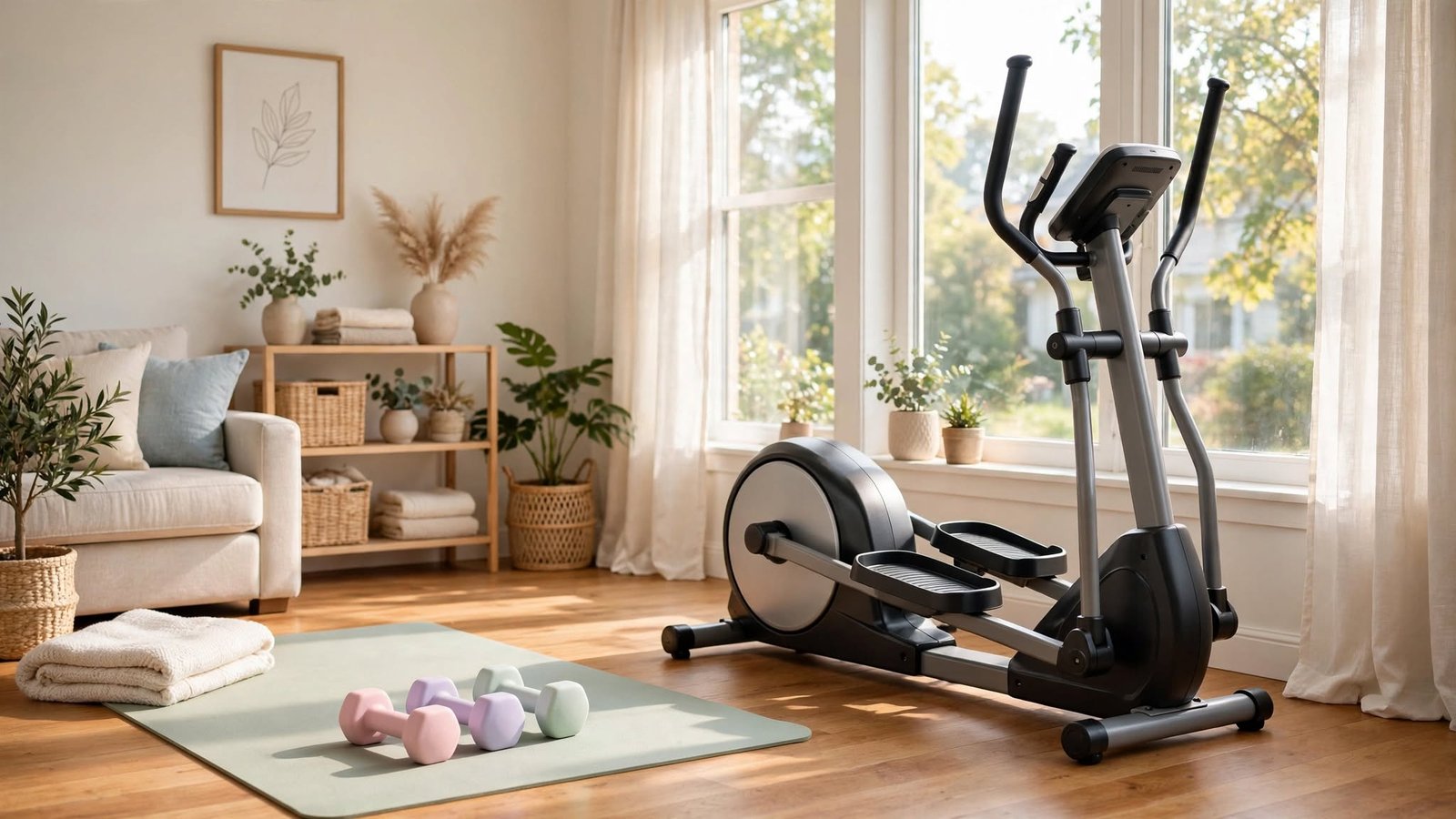
Choosing kinder cardiovascular options allows you to build endurance consistently while protecting your long-term joint health. Step onto an elliptical trainer or try a brisk incline walk on the treadmill for thirty minutes.
- Keep your posture tall and engage your core throughout the session.
- Maintain a steady pace where you can still hold a normal conversation.
💡 Quick Tip
Low-impact cycling or swimming provides an incredible cardiovascular challenge while taking all pressure off your knees and ankles.
Building Bone Density Through Light Resistance Training
As estrogen levels begin to fluctuate during midlife, maintaining bone density becomes a top priority for overall physical longevity. Lifting light weights or using your own body weight sends signals to your bones to stay strong and dense.

Resistance training shapes lean muscle tissue while keeping your metabolism active and your posture upright. Pick up a pair of comfortable dumbbells to practice controlled squats and overhead presses twice a week.
- Start with lighter weights and focus entirely on mastering your form.
- Slow down your repetitions to maximize muscle engagement under tension.
Prioritizing Dynamic Warm Ups to Protect Aging Joints
Cold muscles and stiff joints are much more susceptible to strains when you jump straight into physical exertion. Taking five to ten minutes to warm up prepares your nervous system and lubricates your joints for movement.

Skipping this foundational step increases your risk of minor injuries that can sideline your fitness consistency for weeks. Spend a few minutes doing arm circles, gentle torso twists, and high knees before lifting.
- Never stretch cold muscles statically before your workout begins.
- Focus on rhythmic movements that gently elevate your internal body temperature.
Pre-workout checklist
Shifting From Endless Cardio to Sustainable Strength Circuits
Spending hours on a treadmill every single day often leads to exhaustion without delivering the muscle tone you actually want. Swapping some of that cardio time for structured strength circuits yields much better body composition results.

Resistance training elevates your resting metabolic rate, meaning your body burns calories more efficiently even after you finish exercising.Design a simple circuit of three exercises and repeat it for three efficient rounds.
- Alternate between upper body, lower body, and core movements to stay balanced.
- Rest for sixty seconds between rounds to let your heart rate settle.
Endless hours on cardio machines, chronic joint soreness, and plateaued physical progress.
Balanced strength circuits, improved muscle definition, and higher daily energy levels.
Core Stability Workouts That Protect Your Lower Back
A strong core is much more than just a visible midsection; it acts as the central powerhouse for every single movement you make. Neglecting deep abdominal stability can leave your lower back vulnerable during everyday tasks and workouts.

Incorporating targeted stability exercises protects your spine and improves your overall balance and posture. Practice modified forearm planks or gentle bird-dog extensions to build foundational core strength safely.
- Keep your belly button drawn gently toward your spine to support your lower back.
- Breathe steadily through every hold rather than holding your breath.
- Stop immediately if you feel tension in your lower lumbar region.
Drop down to your knees for modified planks if standard planks strain your back.
Focus on holding proper alignment rather than pushing for long durations.
Incorporate controlled bird-dogs on all fours to build deep spinal support.
Choosing Comfortable and Supportive Footwear for Home Workouts
Exercising in worn-out sneakers or barefoot on hard floors can place undue shock on your ankles, arches, and lower spine. Investing in proper athletic footwear provides the shock absorption and lateral stability your feet need during midlife movement.

Good shoes protect your joints from unnecessary impact while keeping your balance secure through every lunge and step. Check the soles of your current workout sneakers to ensure the tread and cushioning are still intact.
- Look for cross-training shoes that offer both lateral support and flexible forefoots.
- Keep a dedicated pair of indoor-only sneakers to keep your workout space clean.
Balancing High-Stress Days With Restorative Evening Stretching
Navigating a demanding schedule can leave your nervous system in a constant state of high alert, which stiffens your muscles and drains your energy. Transitioning from a busy workday into a calming stretching routine helps signal your body that it is safe to unwind.

Gentle evening mobility work releases tension built up in the hips and shoulders while improving your overall flexibility. Roll out a soft mat in your living room and spend ten minutes easing into deep, relaxing stretches.
- Focus on long, slow inhales and exhales as you hold each gentle stretch.
- Target tight areas like your hip flexors and hamstrings if you sit at a desk all day.
| Stiff Evening Habits | Restorative Stretching Flow |
|---|---|
| Collapsing on the couch immediately after work with tight, aching muscles. | Taking ten minutes to open up the chest, hips, and lower back gently. |
| Carrying physical workday stress into your sleep cycle and waking up sore. | Releasing muscular tension to promote deeper, more restorative rest. |
Tracking Weekly Consistency Instead of Sweating Over Daily Scales
Obsessing over daily changes on the bathroom scale can quickly kill your motivation when your body retains water or repairs muscle tissue. Tracking your weekly workout consistency gives you a realistic measure of success that you can actually control.

Celebrating the fact that you completed your planned sessions builds mental resilience and long-term discipline. Mark a checkmark on a calendar every single time you complete a movement session.
- Focus on building the habit of showing up rather than demanding instant physical transformations.
- Reward yourself with non-food treats like a relaxing bath or a new book after a consistent week.
Track how many workouts you finish successfully each week on a tracker.
Praise your discipline and commitment when life gets hectic.
Do not let a single missed workout derail your entire weekly momentum.
Avoid tying your self-worth to daily morning weight fluctuations.
Creating a Dedicated Workout Space in a Small Room Corner
Hunting for equipment or clearing clutter right before a workout creates mental friction that makes it easy to skip your session. Carving out a tiny, permanent corner in your home removes those small roadblocks completely.

Having your items visible and ready reminds your brain that movement is an important part of your daily rhythm. Clear a small footprint in your bedroom or living room to store your mat and bands neatly.
- Keep your dumbbells tucked neatly in a basket right next to your exercise mat.
- Ensure you have enough open space to swing your arms and extend your legs safely.
- ▸Roll out your yoga mat the night before so it greets you in the morning.
- ▸Keep a small basket for resistance bands and sliders within arm’s reach.
- ▸Position your mat near natural light or a window to boost your mood.
Hydration Habits That Support Energy During Midlife Exercise
Feeling sluggish halfway through your workout is often a direct sign of mild dehydration rather than actual physical exhaustion. Keeping your water intake consistent throughout the day keeps your joints lubricated and your muscles firing efficiently.

Proper fluid balance helps regulate your core body temperature and prevents premature fatigue during movement. Sip water steadily during your workout rather than chugging a massive bottle all at once.
- Add a pinch of pink salt or electrolyte powder to your water on heavy training days.
- Keep a filled glass of water on your nightstand to drink first thing in the morning.
Staying hydrated is a non-negotiable cornerstone of joint comfort, muscle function, and steady energy over forty.
Using Resistance Bands for Joint-Safe Muscle Activation
Traditional iron weights can sometimes feel intimidating or too harsh on sensitive joints when you are easing back into a consistent fitness rhythm. Incorporating elastic resistance bands provides progressive tension that challenges your muscles safely without compressing your spine.

Bands allow you to target hard-to-reach stabilizer muscles while keeping your joints completely safe from jarring movements. Wrap a light loop band around your thighs before doing controlled side-stepping exercises to wake up your glutes.
- Choose color-coded band resistance levels that match your current strength level.
- Keep tension on the band throughout the entire movement to maximize muscle engagement.
💡 Good To Know
Resistance bands provide variable tension, meaning the resistance increases naturally as you stretch the band further apart.
Incorporating Active Recovery Days Into Your Weekly Plan
Pushing your body with high-intensity workouts every single day can quickly lead to chronic fatigue, burnout, and stubborn muscle stiffness. Active recovery sessions keep your blood flowing and help flush out metabolic waste without adding structural stress.
Taking time for gentle movement on your rest days accelerates your muscle repair process and keeps your routine enjoyable. Go for a leisurely walk around your neighborhood or take a gentle mobility class on your off days.
- Listen closely to your body and never mistake active recovery for grueling exercise.
- Focus purely on feeling loose, mobile, and refreshed.
Listening to Your Body and Honoring Low-Energy Days
Midlife brings natural hormonal fluctuations that can temporarily drain your energy levels and leave you feeling completely depleted. Forcing yourself through a rigorous workout on days when you are exhausted can do more harm than good.

Honoring your body’s signals builds long-term trust and keeps you from abandoning your fitness journey out of sheer frustration. Swap your planned strength circuit for a restorative breathing session whenever your body calls for rest.
- Check in with your energy levels honestly before lacing up your sneakers.
- Scale down your workout intensity rather than skipping movement altogether if you feel tired.
- Remember that consistency involves knowing when to push and when to rest.
Assess your physical and mental fatigue before starting your scheduled exercise block.
Opt for a gentle ten-minute stretch session if your muscles feel heavily fatigued.
Treat rest as an essential biological tool for building strength and avoiding burnout.
Quick Ten-Minute Movement Snacks for Busy Workdays
Waiting for a solid hour of free time to exercise can mean your workouts get pushed aside when life gets overwhelmingly busy. Breaking your movement down into short ten-minute sessions keeps your metabolism active throughout the day.

Movement snacks help counteract the negative physical effects of prolonged sitting at a desk or table.Take a ten-minute movement break during your mid-morning or mid-afternoon work lull.
- Do a quick round of bodyweight squats and wall push-ups between work calls.
- Use your lunch break to walk briskly around your building or block.
Break your exercise goals into quick ten-minute micro-sessions.
Incorporate short movement breaks to break up long hours of desk sitting.
Do not skip moving entirely just because you do not have a full hour free.
Avoid sitting continuously for four hours without standing up to stretch.
Building a Long Term Fitness Mindset That Feels Enjoyable
Treating exercise as a punishment for what you ate or a chore you have to cross off makes consistency nearly impossible to maintain. Shifting your perspective toward how movement makes your body feel changes your entire relationship with fitness.

Building a sustainable lifestyle means choosing activities that bring you genuine joy and fit smoothly into your daily schedule. Focus on discovering movement styles you look forward to rather than following rigid fitness fads.
| Punishing Workout Mindset | Sustainable Fitness Lifestyle |
|---|---|
| Exercising out of guilt or forcing yourself through routines you dread. | Moving your body to celebrate strength, energy, and overall wellness. |
| All-or-nothing thinking that causes you to quit after one missed session. | Embracing flexible consistency that adapts gracefully to a busy life. |
Conclusion
Staying consistent with exercise during midlife doesn’t require punishing routines or living inside a gym. By protecting your joints, prioritizing functional strength, and honoring your body’s natural rhythms, you can build a sustainable fitness plan that fits your lifestyle.
Following a realistic workout routine for black women over 40 makes it entirely possible to stay strong, energetic, and confident through every season.


