

15 Ways to Find Jeans That Flatter Black Women Over 40
You grab your usual size, pull the jeans up, and they fit your hips but gap at the back of the waist. Or the waist closes and your thighs feel stuck. Either way, you leave the fitting room with a pile of denim and nothing to buy. That is not a you problem. Most denim…
You grab your usual size, pull the jeans up, and they fit your hips but gap at the back of the waist. Or the waist closes and your thighs feel stuck. Either way, you leave the fitting room with a pile of denim and nothing to buy.
That is not a you problem. Most denim is cut on a straighter frame, then scaled up or down by size. It rarely plans for a fuller seat, strong thighs, and a defined waist. Add a body that may have changed since your thirties, and guessing your size gets even harder.
The good news is that finding jeans that flatter Black women over 40 comes down to a handful of checks you can repeat. Rise, fabric, pockets, hem, and where a tailor should step in. Once you know what to look for, you can judge a pair in about two minutes.
Below are 15 practical ways to shop smarter, each with a quick visual you can screenshot and save for your next denim trip.
1. Start With a High Rise That Sits at Your Natural Waist
Find your natural waist first. It is the narrowest spot between your ribs and hips, usually a bit above your belly button.

A high rise sits right there, so the waistband follows your curve instead of cutting across the widest part of your middle. It also gives your seat somewhere to stay, which is where a lot of low rise jeans slide down.
Quick ways to test it:
- Bend forward and check that the back stays covered
- Raise your arms and see if the waistband stays put
- Walk a few steps and notice whether you keep tugging
2. Do the Sit Down Test Before You Trust the Mirror
Fitting room mirrors only show you standing still. Your day does not work that way.

Sit on the bench, cross your legs, then reach down like you are grabbing something off the floor. If the waistband digs into your stomach or the back dips, those jeans will annoy you by lunchtime. Thighs matter too. Denim that feels fine standing can pinch behind the knee once you sit. Give every pair a full minute of movement before you decide.
Fitting room checklist
3. Read the Fabric Tag Before the Size Tag
A size 14 in one brand fits like a 12 in another. The fabric tag is more honest.
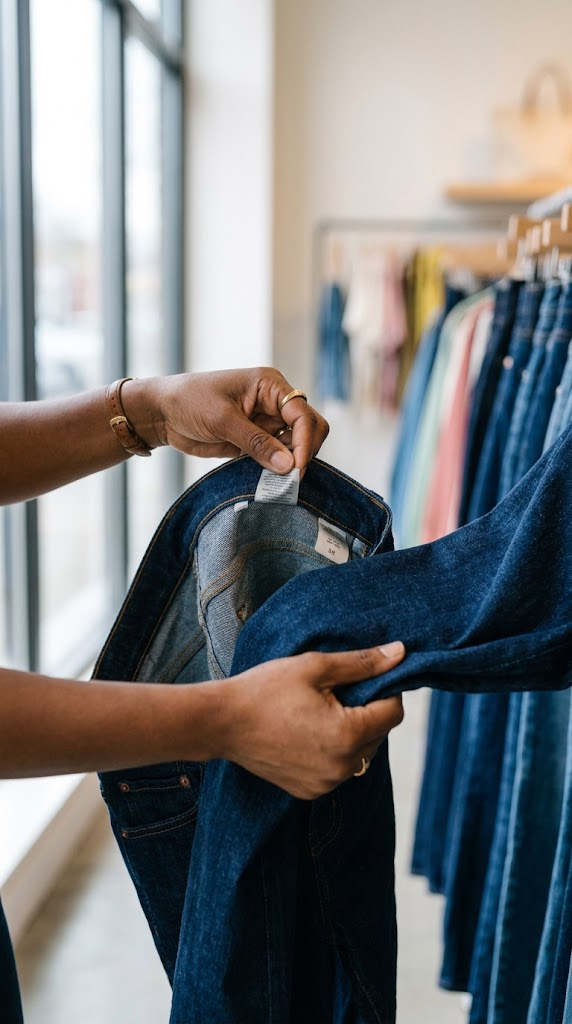
Look for cotton blended with a small amount of elastane or spandex. That gives you room to move without the jeans turning into leggings. All cotton with no stretch can look sharp, but it needs a true fit at the hips and takes time to break in. Very stretchy denim feels great on day one, then can bag out at the knees and seat after a few wears.
Give the thigh fabric a squeeze in the store. It should spring back.
Choose cotton with a touch of elastane.
Pick a medium to heavier weight for support.
Hold the seat up to bright light to check it is not see through.
Thin, very stretchy denim that feels like leggings.
Fabric that stays loose after you squeeze it.
Rigid denim with zero give if you are between sizes.
4. Buy for Your Hips and Thighs, Then Tailor the Waist
Taking fabric in is far easier than adding it.
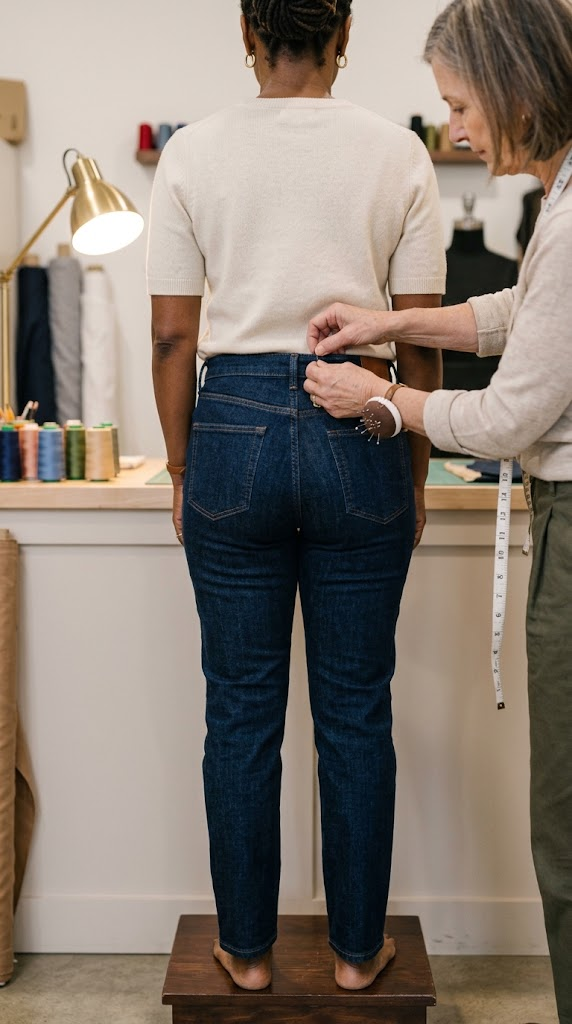
If the jeans fit your hips and thighs but gap at the back of the waist, buy them. A tailor can take in the center back of the waistband, and it is usually one of the simpler jobs. Going the other direction is close to impossible, because you cannot add seat room to a pair that pinches.
- Try the size that fits your widest part
- Ask the tailor to take in the center back seam
- Wear the top and belt you plan to style them with
Buy the fit you cannot alter, then alter the one you can.
| If you buy for the waist | If you buy for the hips |
|---|---|
| Hips and thighs feel tight all day | Comfortable through hips and thighs |
| Extra seat room is very hard to add | Extra waist is easy to take in |
| Often ends up in the back of the closet | Wears well after one alteration |
5. Pick Back Pockets That Sit on Your Curve, Not Below It
Flip the jeans around and start with the back pockets.
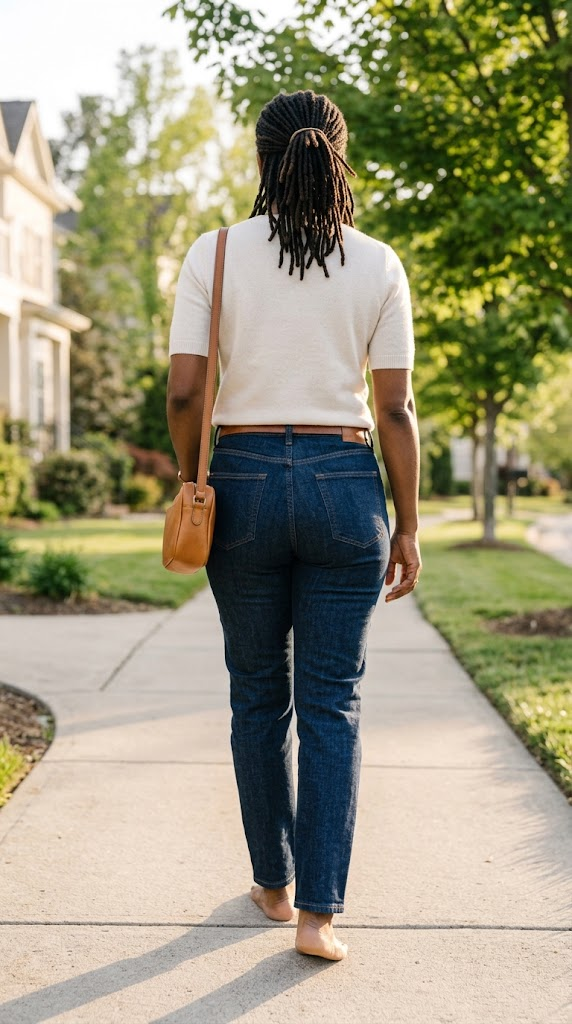
Pockets that are too small and set too high can make a fuller seat look wider. Medium pockets that sit on the fullest part of your curve tend to lift and balance the shape. Check the space between them too. Pockets set far apart add width, while pockets angled slightly toward the center seam usually read as more even.
Heavy flaps and big embroidery pull the eye straight to that spot, so choose them only if that is the goal.
Small pockets set high and wide apart. The seat looks wider and flatter than it is.
Medium pockets on the fullest part of the curve, angled toward the center. The shape looks lifted and balanced.
6. Keep the Leg Opening Wide Enough to Balance Your Hips
Skinny legs on full hips can make the whole shape look top heavy.
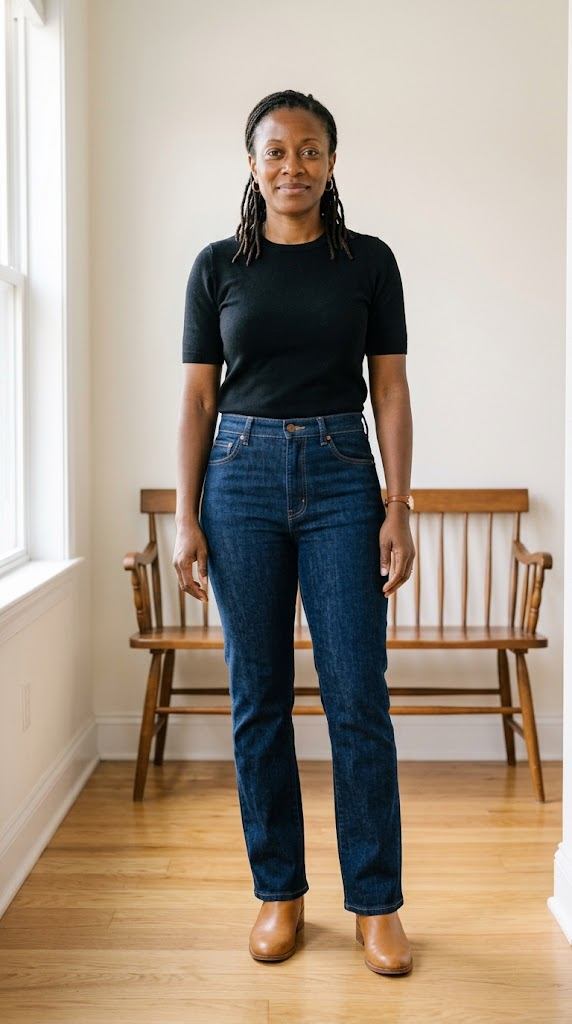
A slightly wider leg opening evens things out. Straight, bootcut, and relaxed leg styles all work because the hem is wide enough to match the width of your hips. Your eye follows a clean vertical line from waist to ankle instead of stopping at a narrow hem.
Not sure if the opening is wide enough? Stand facing the mirror and look at where your hip ends and your foot begins. The leg should skim that space without pulling in sharply at the ankle.
💡 Quick Tip
Hold your hand flat at the widest part of your hip, then compare it to the hem in the mirror. If the hem looks half as wide as your hip, go up a leg width.
7. Go Dark Wash When You Want a Smoother Line
Dark denim does some quiet work for you. Deep indigo and black shades blur pocket edges and seams, so the leg reads as one long, clean shape.
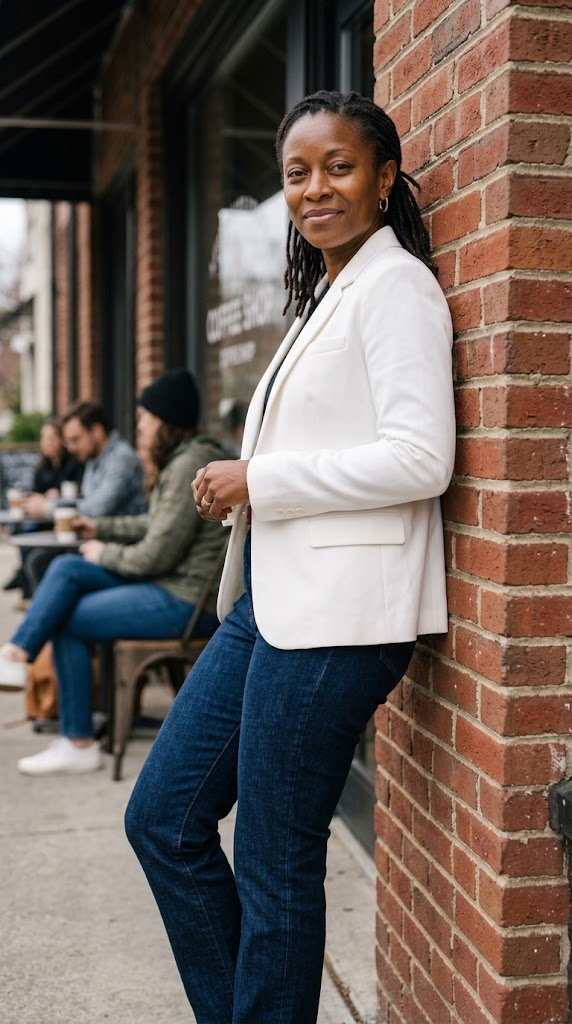
Light washes show every whisker, fade, and crease, which can pull attention to spots you may not want to highlight. Dark washes also dress up faster. A pair in deep blue works with a blazer at work and heels at dinner.
Skip heavy sandblasting in the thigh area. It adds visual noise right where you want a calmer line.
8. Get the Hem Right for the Shoes You Actually Wear
Most people hem jeans once, for one pair of shoes, and then wonder why the length looks off everywhere else.
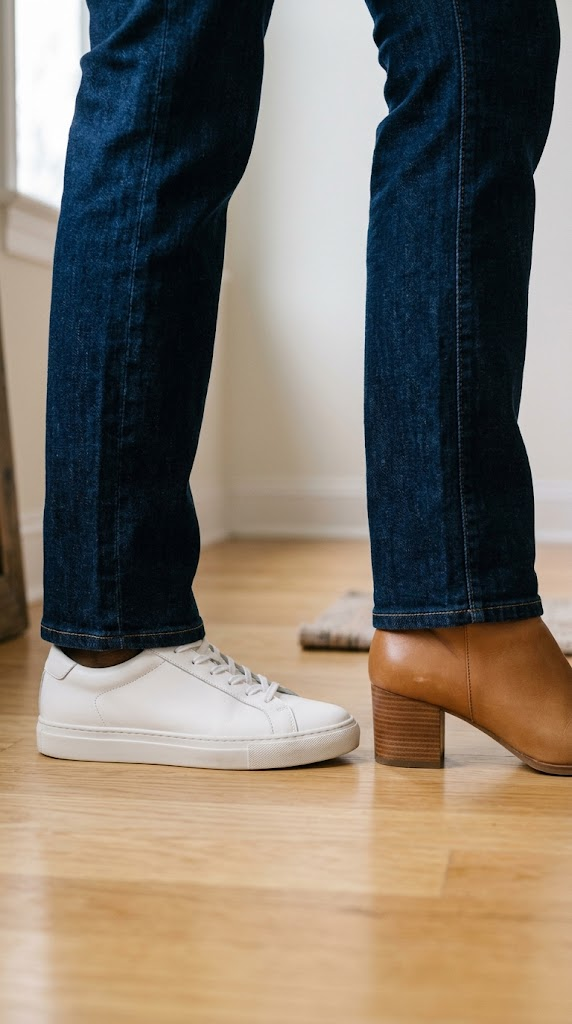
Decide which shoe you wear most. Boots and sneakers need a slightly shorter hem than heels, because a heel lifts you and needs extra length to look intentional. If you wear both, pick the shoe you reach for on regular weekdays and hem for that.
Ask your tailor to keep the original hem when possible. It keeps the faded edge and the look the brand designed.
Put on the shoes you wear most and stand tall.
Let the hem touch the top of a flat shoe, or float just above the floor with heels.
Have the tailor pin it while you stand, then walk once before they sew.
9. Try a Straight or Wide Leg Before You Write Off Jeans
Some women stop wearing denim after years of jeans that pinch, gap, or shift. Then they meet a straight leg or wide leg and the whole idea changes.
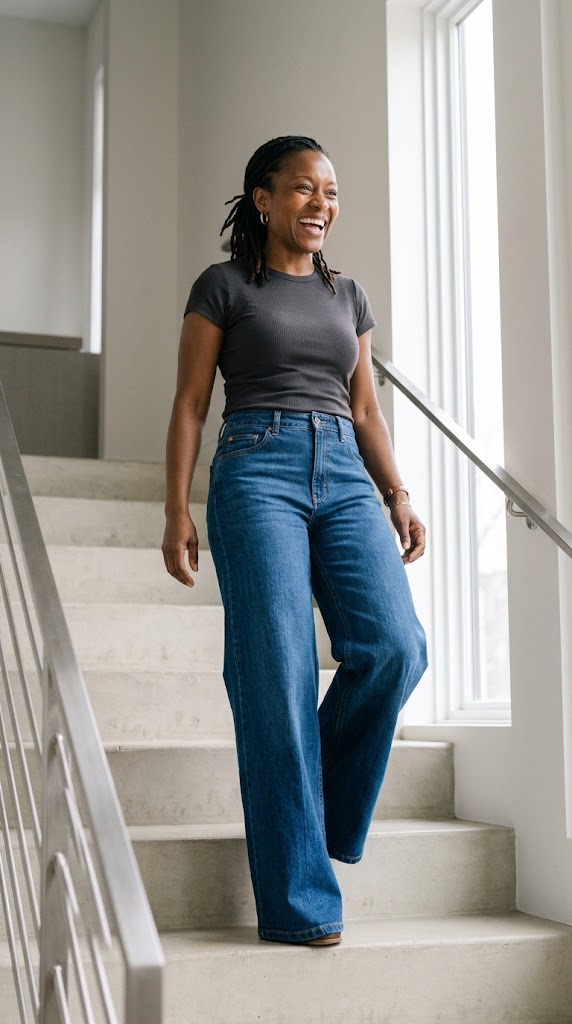
These cuts leave room around the thigh and let the fabric fall in a clean line from the hip. You get comfort without giving up shape, and they pair easily with a fitted top, a tucked shirt, or a cropped jacket.
If skinny jeans have felt like a struggle for years, that is a fit issue, not a personal one. Go up a leg width and see what happens.
If you dislike how denim feels on you, change the cut before you give up on jeans.
10. Check the Seat Seam and the Front Rise Gap
Here is a tiny rule that saves a lot of returns: look at the seat seam and the front rise before anything else.
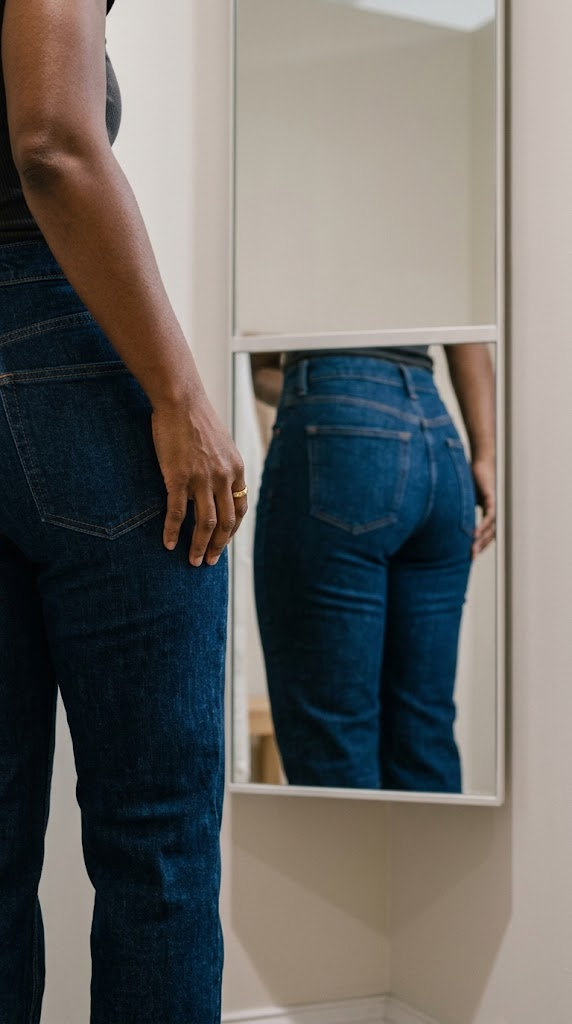
The seat seam is the line that runs up the back of the jeans. If it sinks between your curves or twists to one side, the fit is off. In the front, look for fabric that puckers or gapes right under the zipper. Both mean the cut does not match your shape, and no amount of styling fixes that.
Good jeans should feel like they were made for your proportions from the very first wear.
⚠️ Watch Out
If the back seam pulls into the crease under your seat, or the front rise creates a sharp fold at the zipper, put them back. These are cut problems, not break in problems.
11. Build a Small Denim Rotation by Wash
Three good pairs beat ten so-so ones.
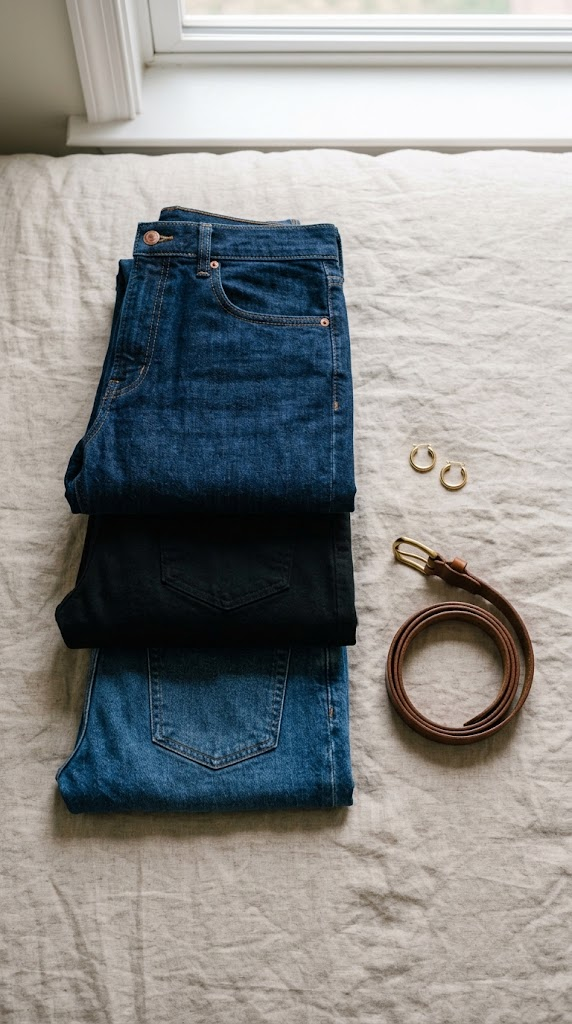
Start with a dark indigo for work and dinners, then a black pair that goes with everything in your closet. Add a mid blue for weekends once the first two fit well. Each wash covers a different kind of day, so you stop buying the same jean twice.
Keep the cut consistent at first. If you know a straight leg works, buy it in all three washes before you try something new.
12. Know Which Fit Names Give Extra Room in the Thigh
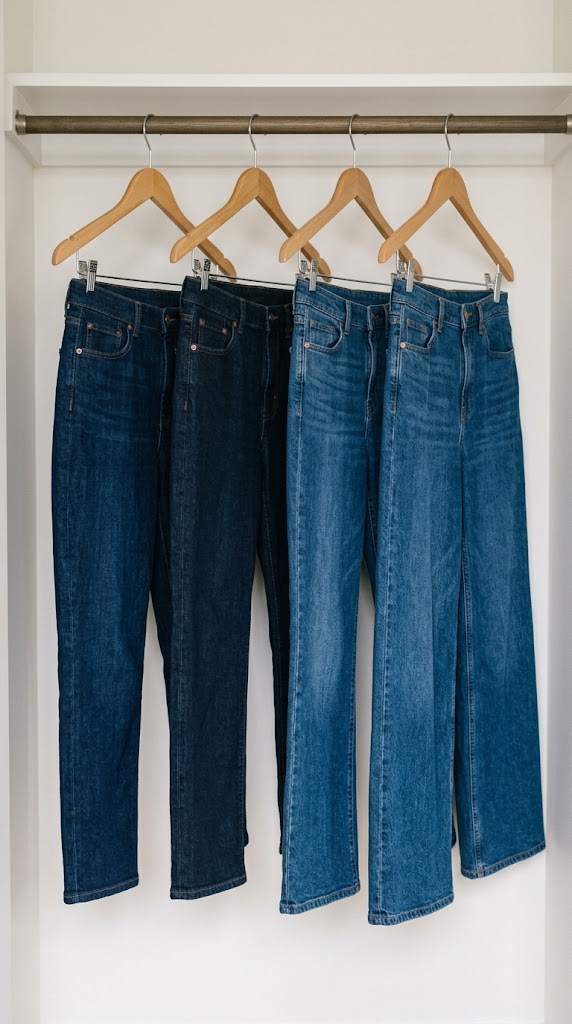
Fit names on the tag can sound alike, but they do different jobs. A “curvy” cut usually adds room through the hip and thigh while keeping the waist closer. Straight legs run even from knee to hem. Bootcut flares slightly at the ankle, which helps balance a fuller lower half.
Every brand uses these labels a little differently, so treat the table below as a starting map, not a promise. The brand’s own size guide will tell you more than the name does.
| Fit name | What it usually does |
|---|---|
| Curvy | More room at hip and thigh, closer at the waist |
| Straight | Even width from knee to hem |
| Bootcut | Slight flare that balances a fuller hip |
| Wide leg | Loose from the hip down, easiest on thighs |
13. Style Them Tucked or Untucked Without Losing Your Waist
Your waist is one of your best features in denim, so show it.
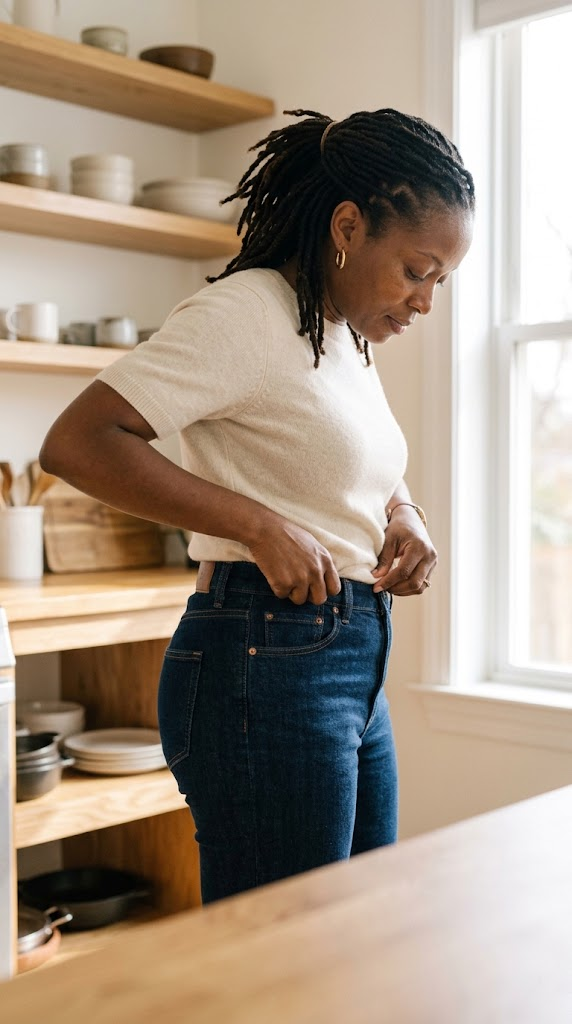
A front tuck works well with a tee or a fitted knit, and it takes about five seconds. If you prefer to leave a top out, pick one that ends right at the hip bone or just below the waistband. Longer tops that hit mid thigh hide the very shape the jeans were built to show.
A thin belt in a color that matches your shoes also draws a clear line at the waist without adding bulk.
Do a loose front tuck with a tee.
Choose tops that end at the hip bone.
Add a slim belt at the natural waist.
Boxy tops that hang past mid thigh.
Thick belts that bunch above the waistband.
Tucking in a stiff, bulky fabric.
14. Wash and Dry Them So They Keep Their Shape
Even the best fit changes after a few rough wash cycles.
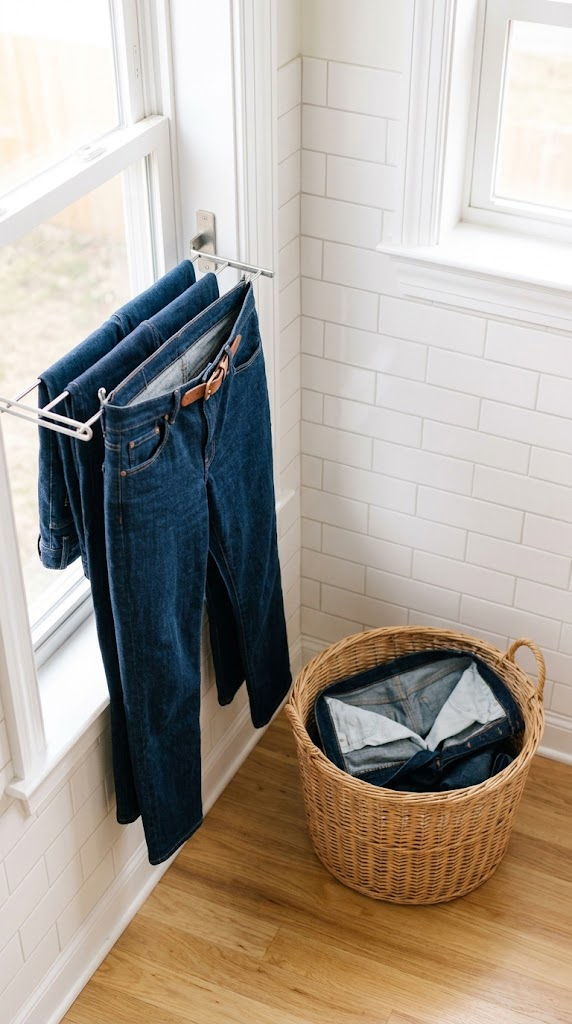
Turn jeans inside out, use cold water, and wash them less often than you think you need to. Heat is what breaks down stretch fibers, so skip the hot dryer when you can. Air drying keeps the seat and knees from bagging out, and it helps the color last longer, especially on dark washes.
If they feel a little tight after washing, wear them for ten minutes. Cotton relaxes with body heat.
Turn them inside out and zip the fly.
Wash cold with a gentle detergent.
Hang them to dry by the waistband or lay flat.
15. Order Two Sizes Online and Keep the One That Passes the Test
Online shopping takes the pressure off, as long as you plan for returns.

Order your usual size and the one above it. Try both at home with the shoes and top you would really wear, then run the sit down test from item 2. Keep the pair that passes and send the other back.
Before you order, read the return policy. Some stores charge for return shipping or have short windows, and a great pair is not worth the hassle if the return costs more than expected.
Conclusion
The best pair of jeans is the one you stop thinking about by noon. It sits at your waist, gives your hips and thighs room to move, and hits the right spot for the shoes you wear most.
None of this takes a new body or a bigger budget. It takes a few checks you can repeat: rise, fabric, seat seam, hem. Once they become habit, finding jeans that flatter Black women over 40 feels less like guessing and more like shopping with a plan.
Start with one pair that passes the sit down test, then build your rotation from there.
Your 4 second denim check