How to Dress for Your Body Type for Black Women
Learning how to dress for your body type changes everything about getting dressed in the morning. It is not about following rigid rules or squeezing yourself into a shape category — it is about knowing your proportions, so you can choose clothes that fit well, feel comfortable, and let your own style come through. Once…
Learning how to dress for your body type changes everything about getting dressed in the morning. It is not about following rigid rules or squeezing yourself into a shape category — it is about knowing your proportions, so you can choose clothes that fit well, feel comfortable, and let your own style come through. Once you understand where your waist sits, how your shoulders compare with your hips, and which fabrics move the way you like, shopping gets faster and outfits come together with far less second-guessing.
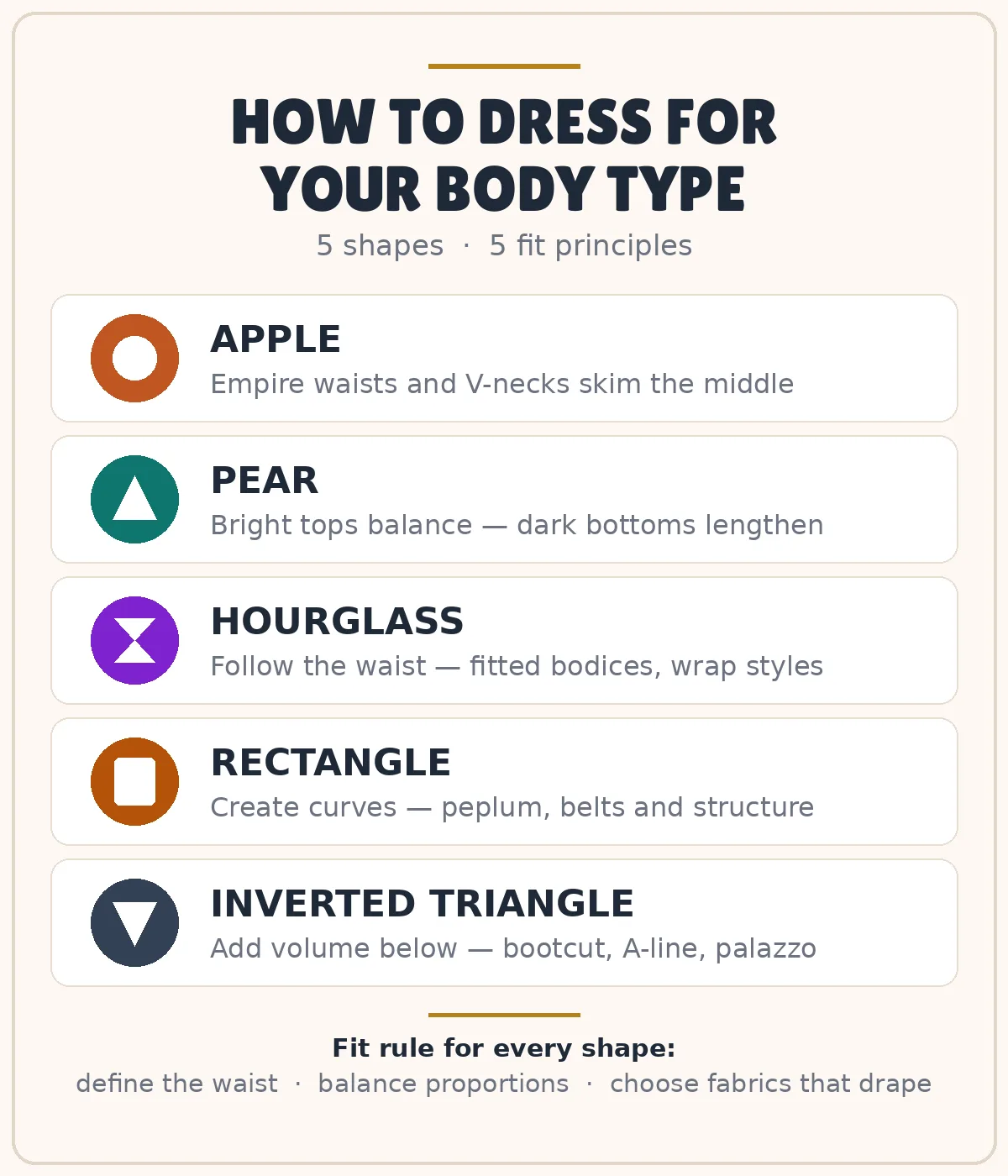
This guide covers the five shapes most women recognise — apple, pear, hourglass, rectangle, and inverted triangle — but every look below is built on universal fit principles that work whatever your shape: define the waist, balance your proportions, choose fabrics that drape rather than cling, and let tailoring do the heavy lifting. If you are still working out which shape sounds most like you, a tape measure and a mirror are all you need, and this body-shape guide from Who What Wear walks through the measurements step by step.
1. The Wrap Dress: How to Dress for Your Body Type With One Waist-Defining Piece
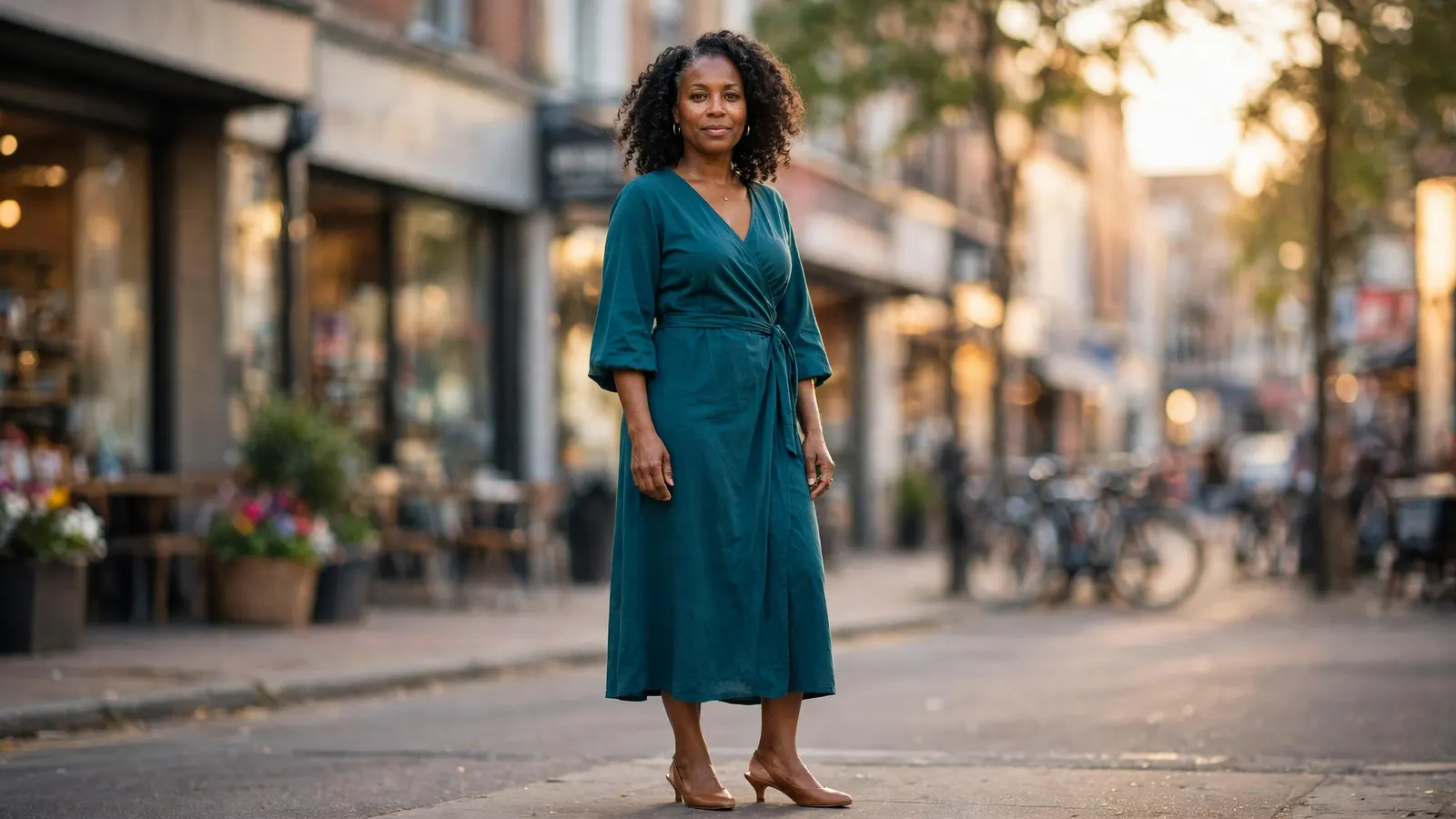
If there is one garment that flatters nearly every shape, it is the wrap dress. The diagonal line draws the eye toward the waist, the V-neckline lengthens the torso, and the skirt skims rather than squeezes. A knee-length or midi wrap dress in a solid jewel tone is the easiest starting point — it works for the office, a lunch date, and a family gathering without a single change.
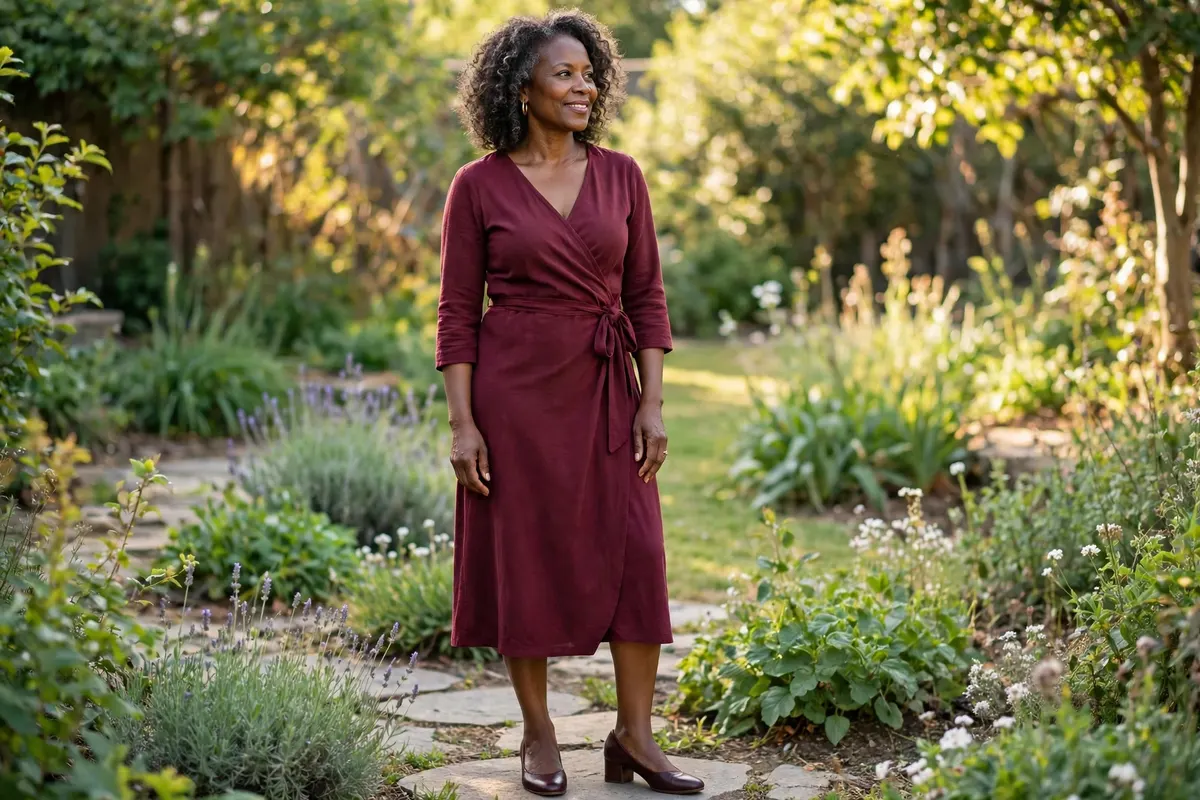
For apple shapes, choose a wrap dress with a slightly higher waist tie and a skirt that flares gently from the hip. For hourglass figures, let the tie sit at your natural waist and the dress will do the rest. Pear shapes do well with a wrap top in a brighter shade over a darker skirt, which balances the silhouette beautifully. Finish with a low block heel and a structured handbag, and keep the jewellery simple so the line of the dress stays the star.
2. High-Waisted Wide-Leg Trousers and a Fitted Top
High-waisted trousers are a quiet superpower. They lengthen the leg, smooth the waistline, and give wide-leg volume a place to fall from — which is why this pairing suits rectangle shapes looking for curves and apple shapes looking for a clean, long line. Choose a pair that sits at your natural waist, not below it, and let the hem just graze the top of your shoes.
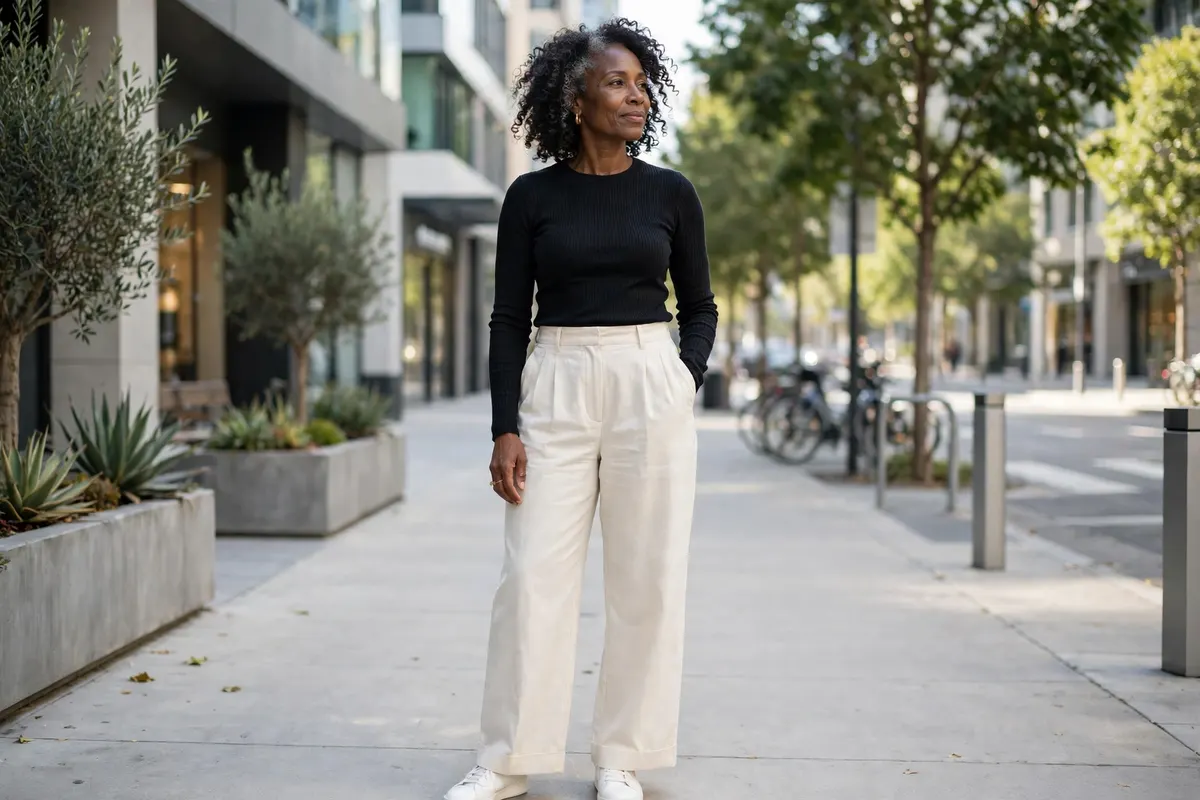
The fitted top is what makes the outfit work: a tucked-in ribbed knit or a slim bodysuit keeps the waist visible and stops the wide leg from swallowing your shape. A good pair of high-waisted trousers earns its place in any capsule wardrobe because it pairs with almost everything you already own — blazers, silk blouses, and a simple tee all work. Add a slim belt in a contrasting shade if you want the waistline to read even more clearly.
3. The A-Line Midi Skirt and a Tucked Blouse
An A-line midi skirt is one of the kindest shapes in fashion. It nips in at the waist and floats away from the hips, which makes it a natural choice for pear shapes — it celebrates the waist while giving the hips room to move. It also works beautifully for apple shapes, because the flare starts above the fullest part of the body and creates a balanced line.

Tuck the blouse in fully and let a thin belt mark the waist. A soft, fluid fabric such as crepe or viscose keeps the skirt moving instead of standing stiffly away from the body, and a midi length that ends just below the knee is the most versatile cut for women over 40. Pair it with pointed flats or a low heel, and carry the same colour family from top to bottom if you want the longest, leanest line.
4. A Structured Blazer Over a Straight Column
Rectangle shapes often hear that they should add curves, and a structured blazer is the most polished way to do it. The blazer’s shoulders add gentle width up top, its nipped waist creates a waistline where the body is straight, and the column underneath keeps everything long and clean. It is the same principle behind the sharp outfits in our winter business casual outfits — structure on top, simplicity underneath.

Look for a blazer with a single button that fastens at your natural waist, and avoid boxy, oversized cuts that hide your shape altogether. A column dress or straight trousers in a darker shade underneath lets the blazer do the shaping, and a pair of pointed-toe shoes extends the leg line. This is also a wonderful formula for apple shapes: the blazer’s open front creates a long vertical line down the centre of the body.
5. The Fit-and-Flare Dress for an Hourglass Figure
Hourglass figures — balanced shoulders and hips with a defined waist — look wonderful in a fit-and-flare dress, because the dress follows the body’s own line instead of fighting it. A fitted bodice, a waist seam at the natural waist, and a skirt that flares from there is the whole formula, and it needs very little else to feel complete.
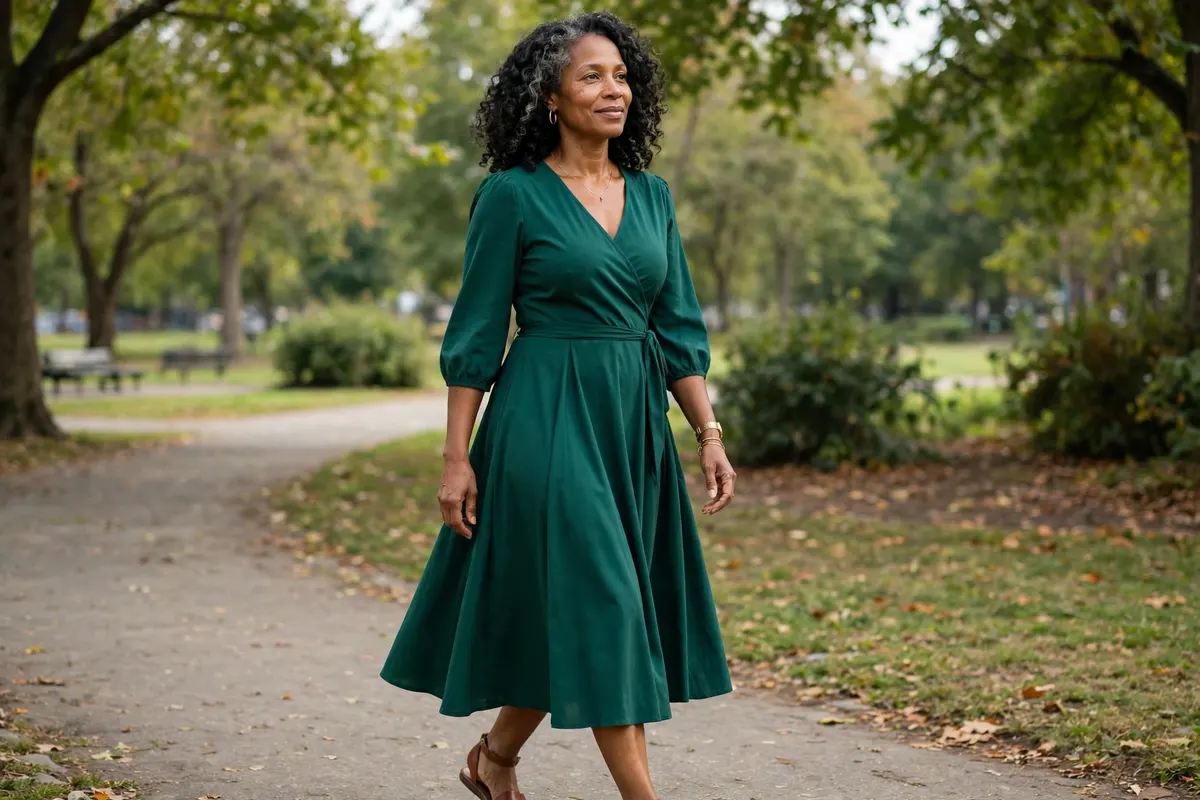
The details matter more than the dress itself: a V-neck or scoop neckline keeps the top half open, a waist seam (rather than an empire line) honours your natural waist, and a fabric with a little stretch, such as ponte or a cotton blend, moves with you. Keep the accessories close to the body — a slim belt is unnecessary here — and let the shape of the dress carry the outfit. A midi length keeps it elegant for daytime, while the same dress in a richer fabric works for an evening out.
6. Dark Straight-Leg Jeans and a Bright Statement Top
Pear shapes carry their width at the hips, so the most flattering move is to draw the eye upward. Dark straight-leg jeans do the opposite job below the waist: they create one long, quiet line from hip to ankle without adding volume. Pair them with a bright or detailed top — a bold colour, an interesting neckline, or a soft ruffle at the shoulder — and the balance shifts exactly where you want it.

Straight-leg jeans in a dark wash are more forgiving than skinny cuts and more current than wide legs for this job. A top that ends at the hip bone, rather than one that stops mid-hip, keeps the proportions clean. Finish with a pair of heeled ankle boots, which add height and keep the leg line long. This is the kind of easy, confident outfit that belongs in any guide to how to dress in your 40s, because it is comfortable, modern, and endlessly repeatable with different tops.
7. A V-Neck Top and Bootcut Trousers
Inverted triangle shapes — broader shoulders and bust with narrower hips — benefit from volume below the waist. Bootcut trousers are the classic answer: they flare gently from the knee and give the lower half the same presence as the upper half. A V-neck top completes the balance by drawing a long vertical line down the torso and softening the shoulder line.
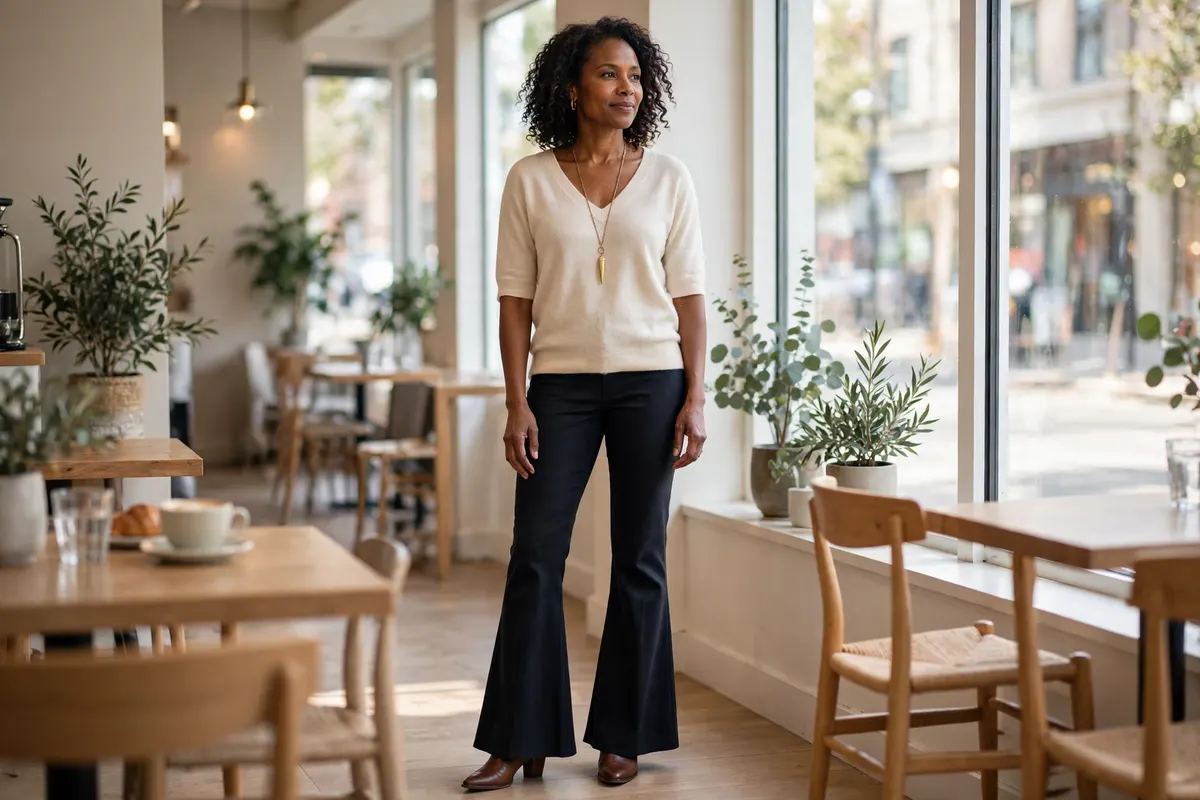
Keep the top simple and fluid — a soft jersey or silk-blend V-neck in a solid colour — and let the trousers provide the shape. Avoid heavy shoulder details, puff sleeves, or halter necklines, which add width where you already have it. A long pendant necklace follows the same vertical line as the neckline and adds a graceful finishing touch. This pairing works just as well dressed up with heels as it does with loafers for a relaxed day.
8. The Monochrome Column Outfit
One colour from head to toe is the oldest elongating trick in the book, and it works on every shape. A single colour — camel, navy, chocolate, or deep green — creates an unbroken vertical line that makes you look taller and leaner, whatever your proportions. The key is to vary the textures so the outfit has depth: a knit top, smooth trousers, and a suede or leather shoe in the same family.
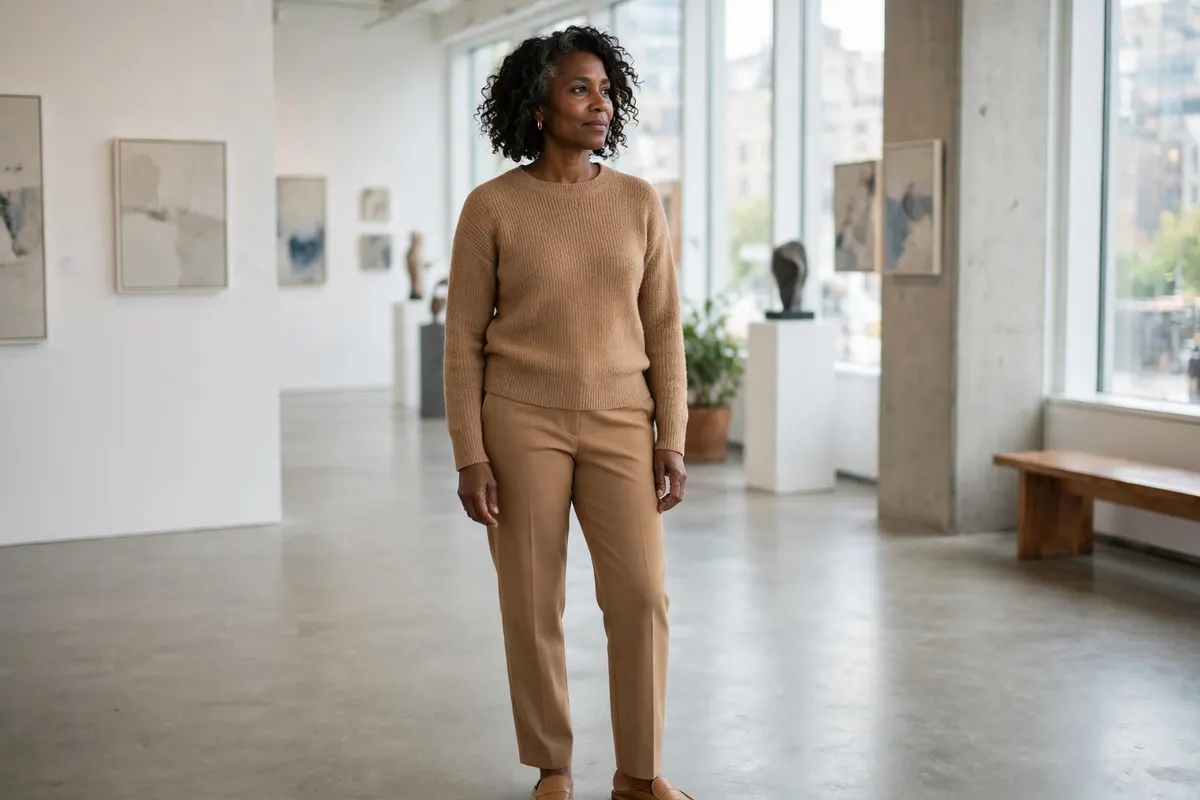
For apple shapes, a monochrome column in a dark shade is especially kind, because there are no horizontal breaks to interrupt the line. For rectangle shapes, add a belt in the same colour family to carve out a waist without breaking the column. Keep the fit close but not tight — the fabric should skim, not cling — and a long coat in the same tone on top turns the whole look into something quietly luxurious.
9. The Belted Sheath Dress
A sheath dress with a belt is the tailored cousin of the wrap dress. The sheath gives you a clean, straight line, and the belt — worn at your natural waist — creates the definition. It is a wonderful choice for hourglass figures who want structure, and for rectangle shapes who want to borrow a waistline for the day.
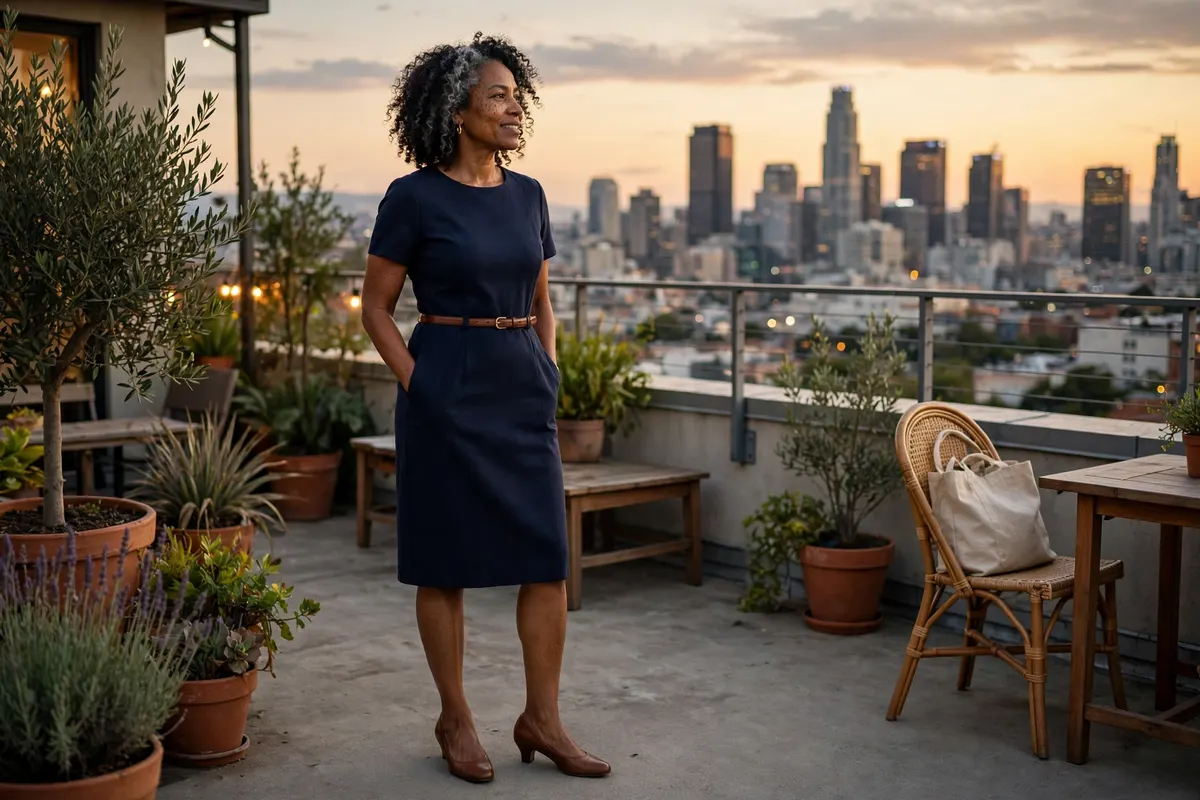
Choose a sheath in a ponte or crepe fabric that holds its shape without stiffness, and a belt no wider than two inches so it reads as a detail rather than a statement. A jewel neckline or a subtle sleeve detail keeps the top half interesting, and a knee-length hem is the most versatile for women over 40. This is a dress that moves easily from a workday to a dinner out with nothing more than a change of shoes.
10. A Peplum Top and a Pencil Skirt
Peplum is a gift for rectangle and hourglass shapes. The little flare at the waist creates the curve that a straight body does not have, and on an hourglass figure it simply celebrates the waist that is already there. Paired with a pencil skirt, the peplum gives you a polished, feminine silhouette that still looks completely professional.

The peplum should sit at your natural waist and flare just enough to suggest a curve — too much volume and the outfit tips into costume. A pencil skirt in a stretch fabric keeps the lower half smooth, and the whole look benefits from good tailoring, which need not cost a fortune: knowing how to look expensive on a budget is mostly about fit, and a peplum-and-pencil pairing is one of the clearest examples of fit doing the work. Finish with a simple heel and a small structured bag.
11. Palazzo Pants and a Fitted Bodice
Palazzo pants bring drama and comfort in the same garment, and they are a beautiful choice for pear shapes: the wide, flowing leg balances the hips while the fitted bodice shows off the waist and shoulders. The contrast between the slim top and the generous trouser is what makes the outfit feel intentional rather than oversized.
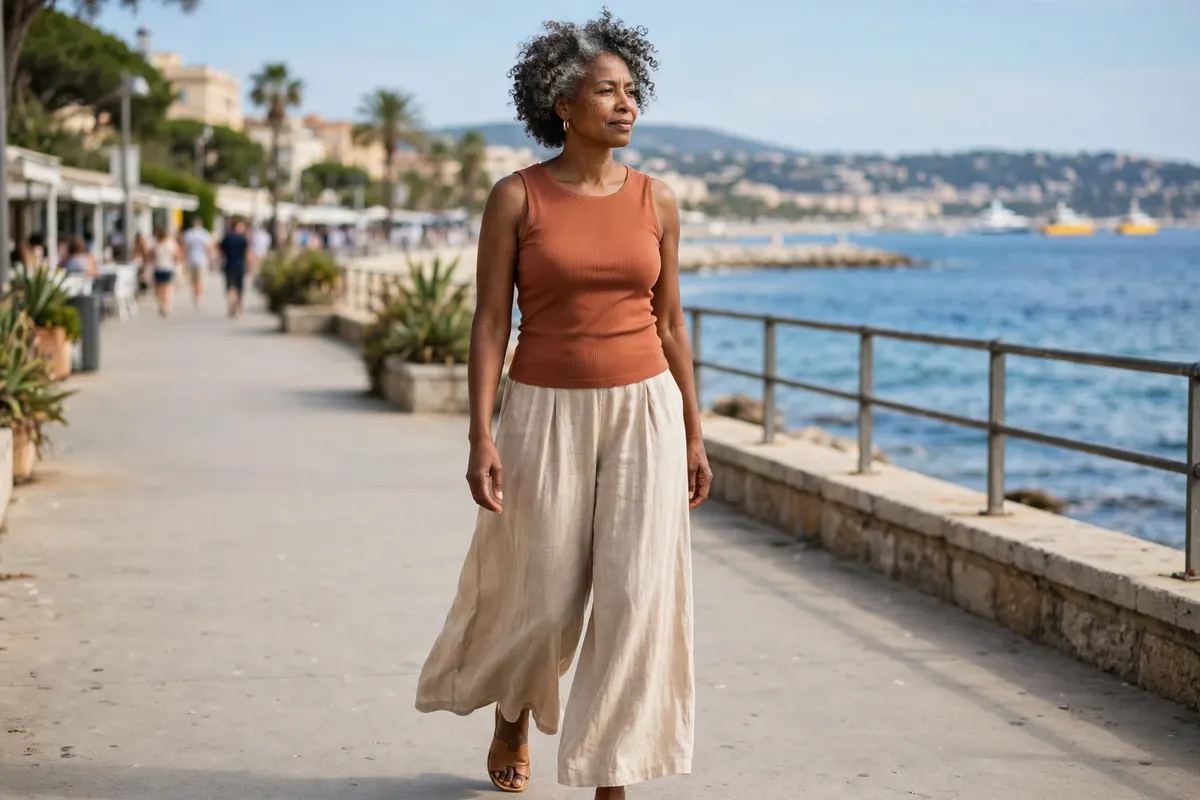
The bodice must be fitted — a tucked-in camisole, a slim knit, or a tailored blouse — because a loose top over palazzo pants loses the waist entirely. High-waisted palazzos are the most flattering cut, and a floor-skimming hem with a heeled sandal underneath gives you the full, graceful sweep. This is a look that travels well from a garden party to a holiday dinner, and it photographs beautifully.
12. The Empire-Waist Maxi Dress
Apple shapes often do best with a waistline that sits just under the bust rather than at the natural waist, and the empire-waist maxi dress is built exactly that way. The high seam lifts the eye upward, the skirt falls in a long, fluid line from the bust, and the fullest part of the midsection is skimmed rather than outlined. It is one of the most comfortable dresses you will ever wear, and one of the most flattering.
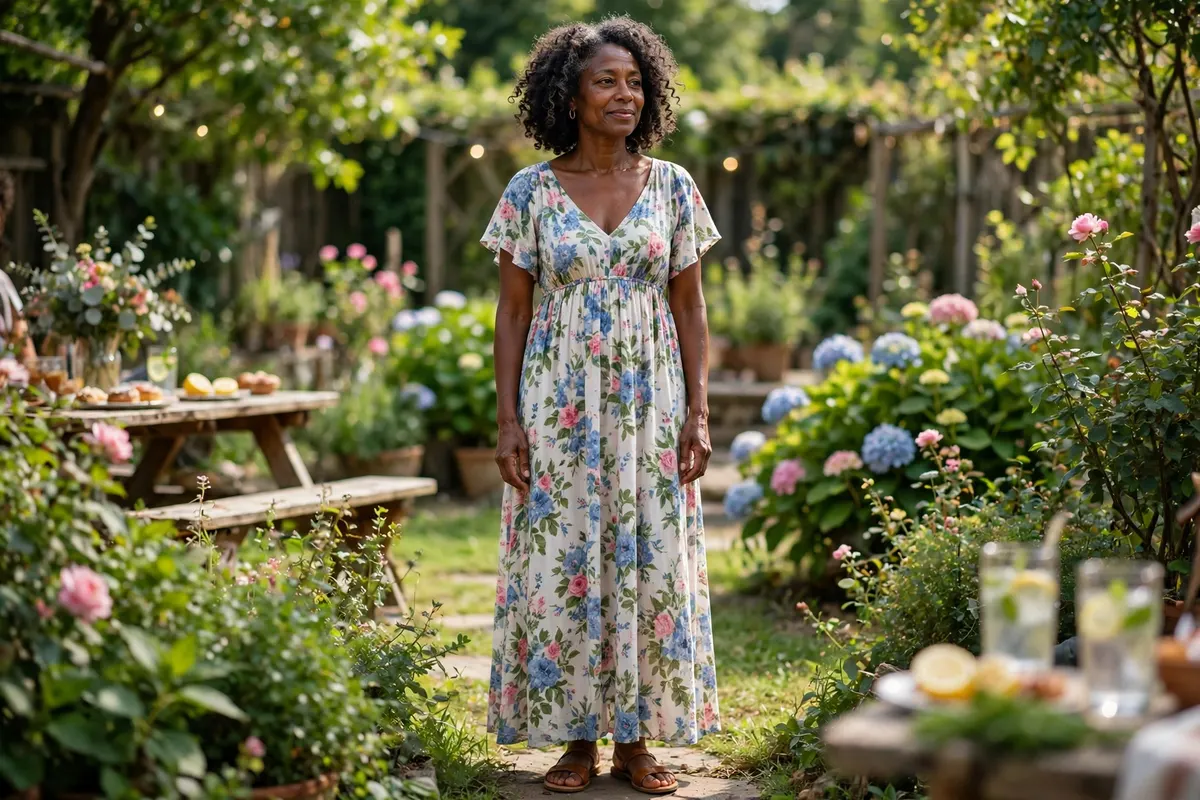
Choose a maxi in a soft, flowing fabric — chiffon, viscose, or a lightweight jersey — and a print that is small or medium in scale, which reads more elegantly than a large, bold pattern on this cut. A V-neckline or a gentle scoop keeps the top half open, and flat sandals or a low wedge keep the whole look relaxed. This is an easy choice for warm-weather days, and it layers beautifully under a light cardigan when the evening cools.
13. A Cropped Jacket and a Long Skirt
Rectangle shapes can play with proportion in ways other shapes cannot, and a cropped jacket over a long skirt is one of the most effective tricks. The short jacket ends at the waist, which makes the waist visible, while the long skirt adds length and movement below — the two together create the illusion of curves and a defined middle.
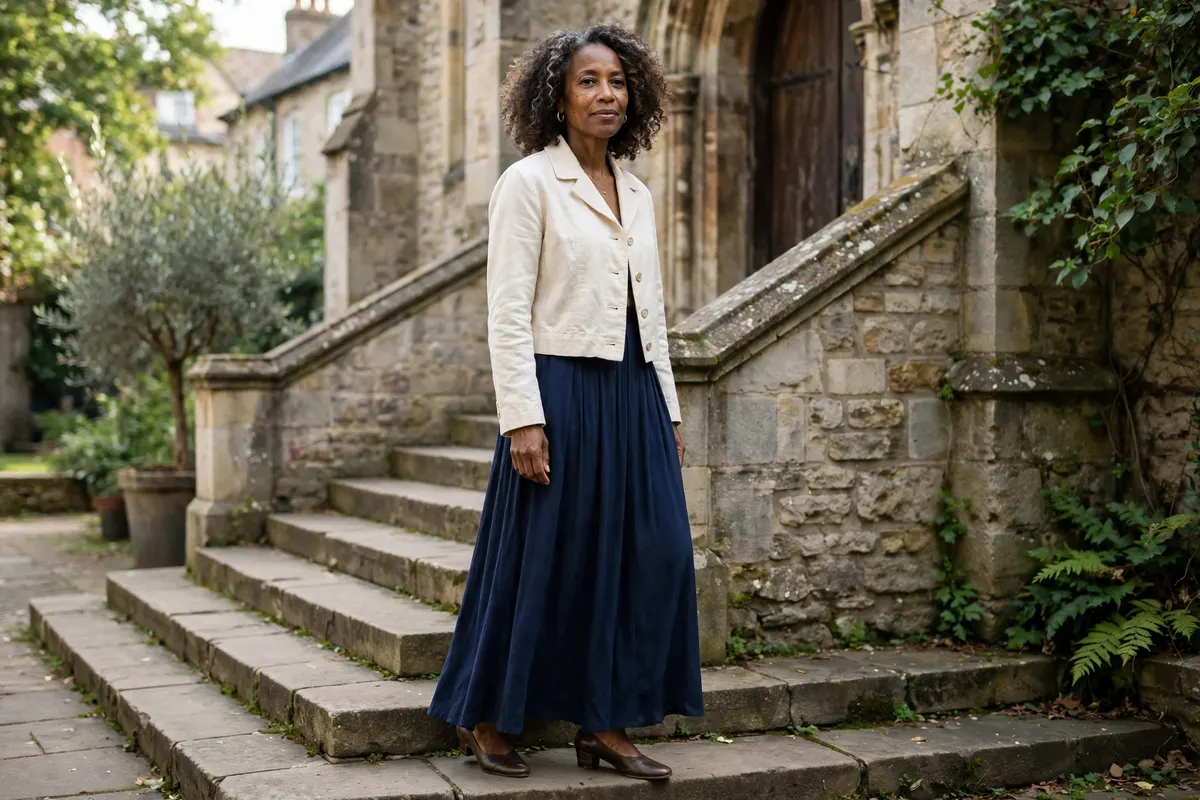
Keep the skirt’s waistband at your natural waist and let the jacket hit right at that same point, so the two lines meet cleanly. A soft A-line or a gentle pleat in the skirt keeps the lower half from looking heavy, and a simple top underneath in a matching or contrasting shade ties it together. This is a lovely outfit for church or a special lunch — the same kind of polished, occasion-ready dressing you will find in our church outfits for Black women over 40. A small heel and a delicate necklace are all the finishing it needs.
14. The Knit Midi Dress With Ruching
Fabric choice is half of fit, and a knit midi dress with gentle ruching proves it. The knit stretches where you need it and holds where you do not, while the ruching — soft gathers at the waist or along one side — creates texture that flatters every shape without adding bulk. It is a dress that forgives a long day, a big lunch, and a lot of sitting down.
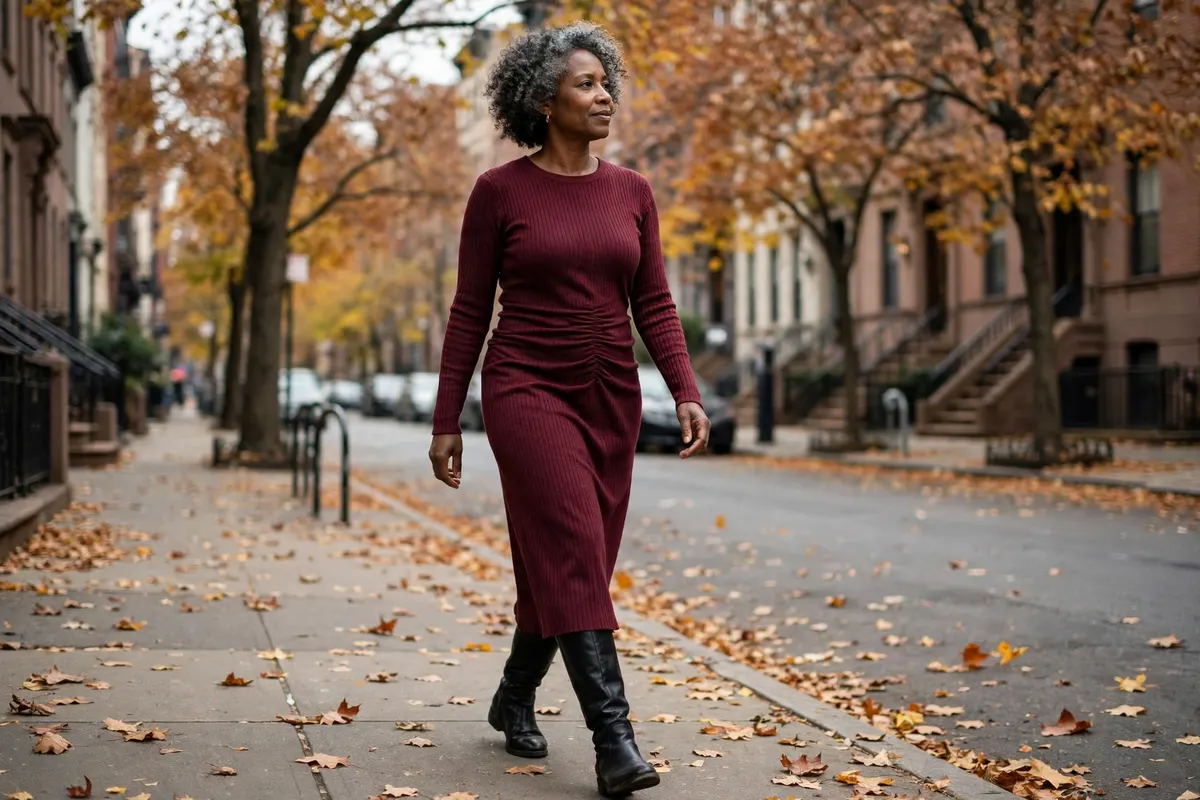
Look for ruching that sits at the waist or drapes diagonally across the body, and a midi length that ends at or just below the knee. A ribbed knit reads more polished than a jersey one, and a solid, rich colour — burgundy, forest, or deep plum — keeps the look elegant. Pair it with knee-high boots in cooler months or strappy sandals in warmer ones. This is the dress to reach for when you want to look put together with almost no effort at all.
15. The Tailored Suit, Cut for Your Shape
Nothing says you understand your body like a suit that fits. The principles are the same whatever your shape: shoulders that end at your shoulders, a jacket that closes without pulling, trousers that break cleanly at the shoe, and a waist that is defined rather than hidden. A suit is not a uniform — it is a canvas, and the tailoring is what makes it yours.

Apple shapes do well with a single-button jacket worn open over a V-neck top. Pear shapes suit a jacket that ends at the hip with straight-leg trousers. Hourglass figures should look for a nipped waist and a pencil or straight skirt. Rectangle shapes can add a belt or choose a jacket with a peplum hem. And every shape benefits from a tailor: even a small adjustment — shortening a sleeve, taking in a waist — transforms an off-the-rack suit into something that looks made for you. It is the same quiet luxury behind our luxury outfit ideas, and it works at any price point.
How to Dress for Your Body Type Every Day: Your Fit Checklist
Knowing how to dress for your body type is not a one-time lesson — it is a habit you build every time you get dressed. Before you leave the house, run through a quick check: can you see your waist, or have you created one with a belt, a wrap, or a seam? Is your silhouette balanced — volume on top matched with something slimmer below, or the other way around? Does the fabric drape and move, or is it clinging where you would rather it skimmed? And does the outfit feel comfortable enough to wear all day? If the answer to all four is yes, you are dressed for your body type.
Start with one principle at a time rather than trying to rebuild your whole wardrobe at once. Add a wrap dress, a pair of high-waisted trousers, or a good blazer, and notice how often you reach for it. Over time, your closet fills with pieces that work with your shape instead of against it — and getting dressed becomes the easiest part of your day. For a deeper dive into the five shapes and the measurements behind them, this body-type dressing guide is a useful companion to this article.